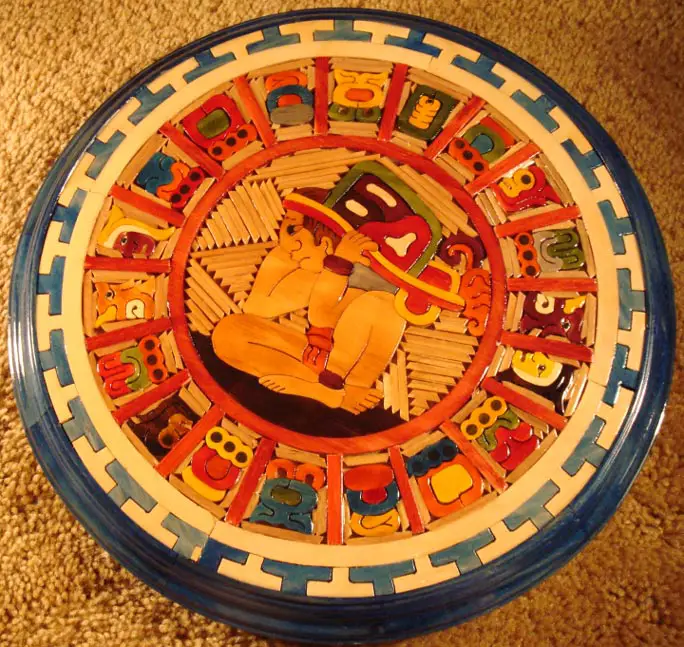
Before man learned about words and letters, he used different drawings and pictures to communicate stories and narratives to other people. Certain drawings or pictures were commonly used to connote particular things. Thus, symbols were born. Through the years, people worldwide have used symbols to mean many different things. They have become an easy way to point out an ideology, express an abstract thought, or even denote a group or community with the same goals. Below are some of the most iconic symbols used throughout history and how they influenced the world.
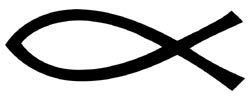
The Christian fish
|
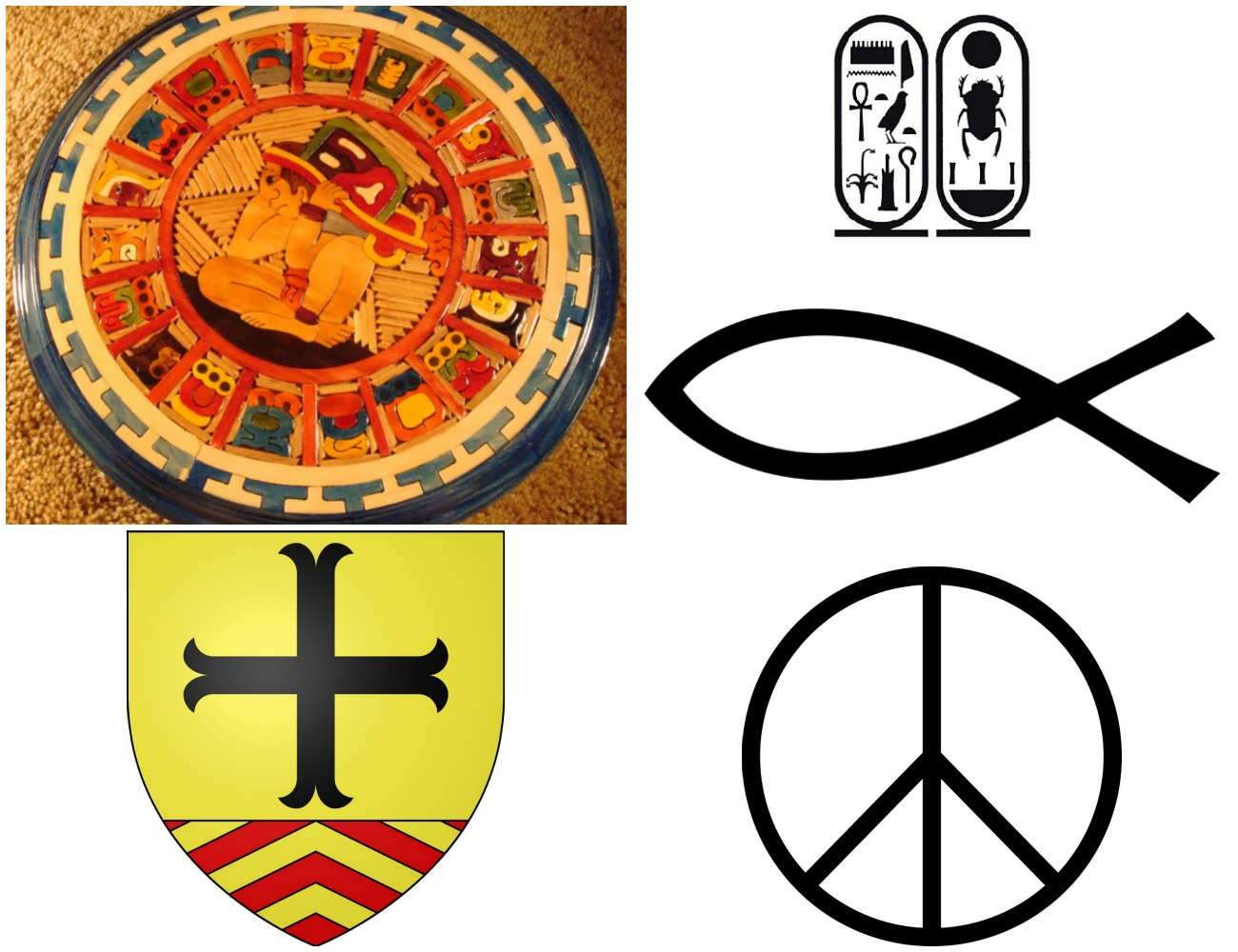
Christians started using this symbol during the first three centuries after Christ. It was the time when many Christians were being persecuted. Some say that a believer drew a curved line resembling half of a fish when he met a man. If the other man were a follower of Christ as well, he would complete the lower half with another curved line to create a simple fish drawing.This symbol was meant to pertain to Jesus Christ, who was said to be “a fisher of men.” Other historians believe that the symbol stemmed from the word “Ichthys,” whose first letters could mean Iesous Christos Theou Yios Soter, an acrostic for ‘Jesus Christ, God’s Son, Savior.’ This symbol is still used, until now, by Christians all over the world. |
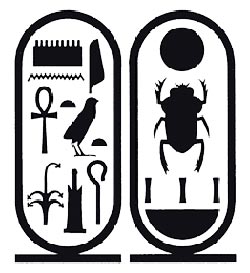
Egyptian Hieroglyphics
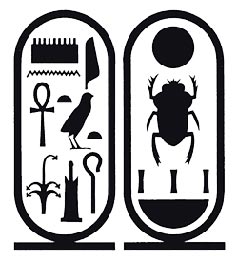
| Egyptian hieroglyphics and symbols largely influenced the English alphabet that we know now. Some historians even think that all the alphabets of the world stem from these hieroglyphics since ancient Egyptians used symbols to represent language and even sound. |
 |
The Mayan Calendar
 |
It’s hard to imagine what life (and work) would be like without a calendar. It’s a good thing that the world adopted what was then a mixture of symbols and different glyphs. The Mayan calendar system dated as far back as 6th century BC and was used more than to differentiate days and seasons. It was also used to understand what happened in the past and even to see what could happen in the future. |
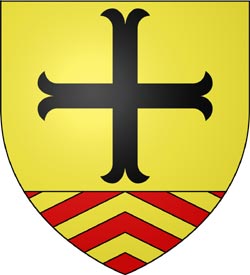
Coats of arms
| These symbols were used in Europe to denote an army, a group of people or even a family lineage. Even the Japanese have their coats of arms, called the “Kamon.” These symbols have evolved into the different flags that each country has to signify nationalism, patriotism, and the unity of its people. |
 |
The Swastika
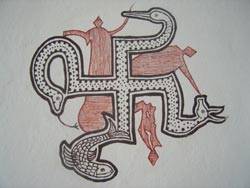 |
The swastika can be simply described as an equilateral cross with the arms bent at right angles. Even before Adolf Hitler was born, the swastika was already used in Indo-European cultures in the Neolithic ages. It was used to connote good fortune or luck and is still considered one of the sacred symbols of Hinduism and Buddhism.Of course, most of us consider this as a fearsome symbol because Hitler used the swastika as his insignia when he ordered the mass murder of millions of Jews and the death in war of tens of millions of people worldwide. |
The Eye of Providence
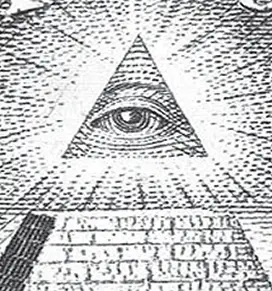 |
Also known as the All Seeing Eye or the Eye of God, this is a ubiquitous symbol used for centuries by different cultures and nationalities in religious and non-religious settings. Depicted as a single eye set inside a triangle, it is representative of the omnipresence and omniscience of the Almighty, who keeps a watch over all His creation. The symbol has generally been used to guide the wayward mankind and remind one and all that everyone’s thoughts and deeds are being observed at all times by the Creator of this universe. |
The peace sign
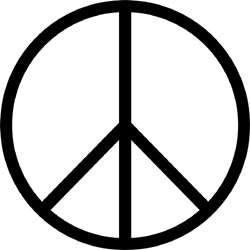
| This symbol was born in the UK about 50 years ago. It was used in anti-nuclear protests in Trafalgar Square in London. The sign was taken from the semaphores, or flag symbols, for “N” and “D” (which are the first letters in “Nuclear” and “Disarmament”) and the circle was drawn to connote the world or the earth. The symbol then became prominent in the ‘60s and ‘70s, when Americans used it for anti-war protests. It has since become one of the few symbols used for counter-culture groups and many protesters worldwide. |
 |
Hammer and Sickle
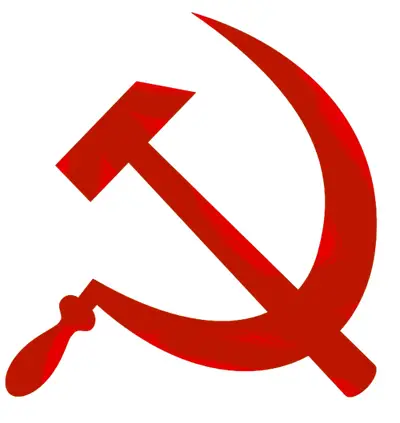
| Hammer and Sickle is possibly the most recognizable symbol of the former USSR and the ideology that it represented. This symbol comprising two crossed tools came up during the Russian Revolution and was later incorporated into the Soviet Union flag. The hammer is traditionally a symbol of the proletariat, while the sickle is a typical symbol of the peasantry. With their coming together, the Hammer and Sickle symbol represents the unity of the workers and the peasants. Even after the Soviet Union was dissolved, the Hammer and Sickle has endured as a universal symbol of communism. |
 |
Circle
| The circle is one of the most ancient, universal sacred symbols. It has held spiritual connotations for nearly all cultures worldwide and is seen as symbolizing the concept of cosmic unity and the eternal, infinite nature of existence. The circle is also considered to represent the heavenly bodies like the sun, the moon, and the earth and embody their divine energy. The Circle has had a significant influence on symbology. It has inspired and has been included in many symbols from diverse cultures. |
 |